Coffeeday: A Friendly Handwritten Font for Small Business Branding
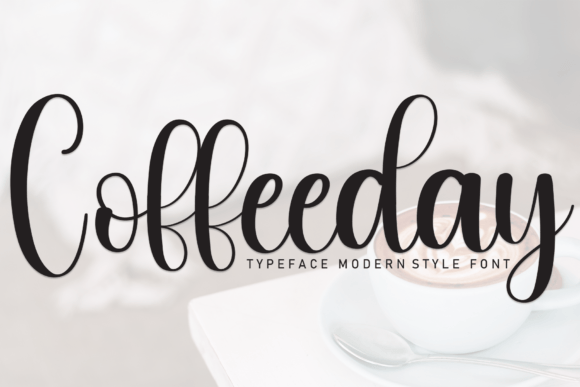
As a small business owner who designs every label, writes every Instagram caption, and prints every thank-you card myself, I know how much a single font choice can shape how customers see my brand—not just once, but across dozens of touchpoints. That’s why I reached for Coffeeday: a sweet, friendly handwritten font from the Script Amp collection that feels personal without sacrificing polish. It’s fresh and neat—not messy or overly ornate—so it works where many script fonts fall short: on product labels, website banners, café menus, and even tiny sticker backs.
Coffeeday has warmth in its curves and clarity in its spacing. It’s not a dramatic calligraphy font meant only for wedding invites—it’s built for real business use. The lowercase “a” and “g” have gentle, open shapes. Letters flow smoothly but don’t blur together at smaller sizes. That means it stays legible on a 2-inch candle jar label, a mobile-optimized Instagram story, or a printed postcard mailed to local clients. As a handmade soap maker, I tested Coffeeday on lavender-scented soap tags—and yes, it held up beautifully next to delicate botanical illustrations and crisp ingredient lists.
Here’s where Coffeeday shines most for small businesses:
- Logos & wordmarks — Use it as your primary logo typeface if your brand voice is warm, approachable, and human-centered (think: a neighborhood bakery, a wellness coach, or a ceramicist selling mugs online).
- Packaging & product labels — Its clean baseline and consistent x-height make it easy to align with barcodes, certifications, or nutrition facts—no awkward cropping or scaling needed.
- Social media graphics — Pair Coffeeday headlines with a simple sans serif body font for Instagram carousels or Pinterest pins. It draws attention without shouting—perfect for quiet luxury or mindful living brands.
- Website headers & hero banners — On desktop and mobile, Coffeeday adds personality above the fold while staying fast-loading and accessible when paired with web-safe fallbacks.
- Printed collateral — From boutique business cards to seasonal flyers handed out at farmers’ markets, it prints crisply on both matte and glossy stock.
I’ve used Coffeeday for a local café’s weekly specials board—and customers told me the menu “felt like it was written just for them.” That’s the subtle power of a well-chosen script font: it builds trust by signaling care, authenticity, and intention. When your packaging reads like a note from a friend rather than a corporate brochure, people remember you. And consistency matters: using Coffeeday across your Instagram bio, product tags, and receipt paper creates visual rhythm that strengthens recall.
That said, Coffeeday isn’t meant to carry all the weight. Think of it as your accent font—not your workhorse. For body text, long-form emails, or ingredient lists, pair it with a clean, highly readable sans serif like Inter, Montserrat, or Open Sans. For a more elevated contrast, try it with a warm serif like Lora or Playfair Display—ideal for a boutique skincare line or a literary coaching service. These pairings keep your typography hierarchy clear: Coffeeday sets the tone; your supporting font delivers the details.
Before locking it into your full brand system, test Coffeeday in context. Print a mock-up of your best-selling product label at actual size. Paste a sample headline into your Shopify store preview. Drop it into a Canva social template and view it on your phone screen. Does it hold up at 14px? Does it feel balanced beside your photography or illustrations? If your brand leans minimalist or ultra-modern, Coffeeday may feel too soft—save it for brands rooted in craft, comfort, or community.
One practical note: Coffeeday is a premium font from the Script Amp category, so always confirm its commercial license covers your intended use. Most Script Amp fonts include broad usage rights—but double-check before applying it to merchandise, digital templates you sell, or client projects where font redistribution is involved. Licensing ensures you’re protected and supports the designers who make thoughtful, business-ready typefaces like this one.
Real-world examples help bring it to life. A candlemaker uses Coffeeday for scent names (“Honey & Sage”, “Rainy Window”) on amber glass jars—paired with a thin sans serif for burn time and safety warnings. A children’s book illustrator uses it for character names in promotional posters and newsletter headers—keeping the rest of the layout clean and uncluttered. A freelance photographer uses Coffeeday for her studio name on digital watermarks and printed contact cards—never on full captions, but always where she wants to say, “This is me, personally.”
Typography isn’t decoration—it’s communication. Every time someone sees your brand, they’re making split-second judgments about your values, your quality, and whether you understand them. Coffeeday helps small businesses speak with sincerity and style—not perfection, but presence. It doesn’t try to be everything. It does one thing beautifully: make your brand feel like it’s made by hand, for humans.
If your current font feels generic, stiff, or disconnected from your voice, consider swapping in Coffeeday for your next round of customer-facing materials. Start small: redesign your email signature, refresh your Instagram highlights cover, or rework your product page headline. See how it changes the feeling—not just the look—of your brand. You’ll notice it in the replies you get, the shares you earn, and the way people describe your business to others: “It just feels so *real*.”