Openbook Handwritten Font for Crafters & Sellers
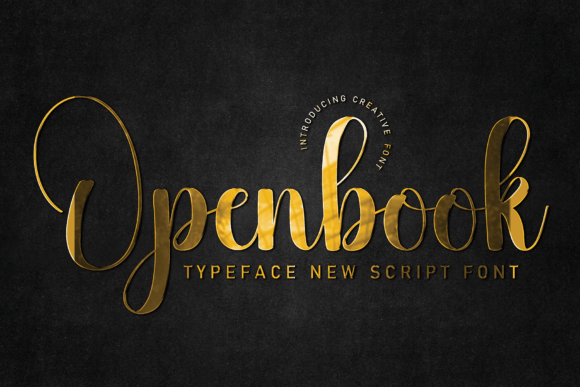
If you’ve ever spent hours tweaking letter spacing on a candle label—only to find it looks stiff or overly digital—you know how much a single typeface can make or break your product’s warmth and authenticity. That’s why I reached for Openbook the moment I saw its flowing, graceful rhythm. It’s not just another script font—it’s a handwritten font with real breath: soft entry strokes, natural exit flourishes, and subtle variation that mimics ink on paper. As a maker who designs printable wall art, boutique gift tags, and wedding stationery for small shops, I need fonts that feel personal *and* hold up in production—and Openbook delivers both.
Why Openbook Works So Well on Physical Products
Unlike many decorative scripts that blur at small sizes or struggle with cut lines, Openbook is built for clarity without sacrificing charm. Its medium contrast and open counters mean it stays legible even at 12pt on a kraft paper sticker or laser-cut wooden tag. I’ve used it for lavender-scented soap labels (3/4" tall), hand-lettered welcome boards for bridal showers, and even heat-pressed tote bags—and every time, customers comment on how “real” it feels. That’s the power of a well-designed script font: it adds humanity to handmade goods without asking for extra design labor.
Where I Use Openbook Most Often
- Candle & apothecary labels: Paired with a clean sans serif like Montserrat Light for ingredient lists, Openbook shines as the product name—elegant but grounded, never fussy.
- Wedding stationery: From “Mr. & Mrs.” on foil-stamped invitations to delicate “Welcome” signs at reception entrances, Openbook balances romance and readability better than most handwritten fonts I’ve tested.
- Digital printables: My best-selling planner stickers (“You’ve got this”, “Breathe”, “Today is yours”) use Openbook for the main phrase, then switch to a rounded sans for checkmarks or dates—clean hierarchy, zero visual fatigue.
- Farmhouse-style signs & wall art: Cut from birch plywood or printed on linen-textured cardstock, Openbook’s gentle flow gives rustic pieces quiet sophistication—not forced whimsy.
- Seasonal packaging: Holiday mugs, Easter egg tags, and summer lemonade stand banners all benefit from Openbook’s timeless tone. It doesn’t scream “2024”—it feels like something you’d keep on a shelf for years.
Readability Tips for Real-World Making
Here’s what I’ve learned after using Openbook across Cricut Design Space, Silhouette Studio, and print-ready PDFs: avoid stacking more than 3–4 words in tight curves unless you’re using its included swashes intentionally. For small stickers (under 1"), stick to single words or short names—“Hazel”, “June”, “Wildflower”—and skip ligatures. The font includes alternate characters and contextual swashes, but I reserve those for larger display uses like wedding signage or social media banners where detail reads clearly. Also, always convert to outlines before sending to print vendors—this prevents rendering hiccups with the handwritten texture.
Smart Font Pairing for Consistent Branding
Openbook thrives when paired thoughtfully. Think of it as your expressive voice—and pair it with a calm, reliable counterpart. I default to Inter or Manrope for body text, product descriptions, and care instructions: neutral, highly legible, and free for commercial use. For packaging or boutique tags, I’ll sometimes layer Openbook over a thin serif like Playfair Display Italic for contrast that still feels curated—not chaotic. The key is balance: let Openbook carry the emotional weight, and let the supporting font handle information cleanly.
Licensing, Formats & Practical Notes
Openbook comes in OTF and TTF formats—both work flawlessly in design software and cutting machines. I’ve confirmed it supports Latin-based languages (including accented characters for French, Spanish, and German product names), which matters if you sell internationally on Etsy or craft fairs abroad. And yes—it’s a commercial font licensed for physical products, digital downloads, SVG files, templates, and client work. That means you can embed it in Canva templates, include it in your Procreate brush kits, or use it on t-shirts sold through Printful—no extra permissions needed. Just keep your license file handy for audits (Etsy occasionally asks).
A Font That Grows With Your Shop
What makes Openbook different from other premium font purchases is how often I return to it—not as a novelty, but as a trusted tool. It works for a minimalist black-and-white greeting card and also for a vibrant floral birthday invitation. It reads beautifully on matte paper and pops on glossy vinyl. It doesn’t shout—but it invites attention. That’s rare in modern typography, especially among script amp fonts designed for display use. If your shop leans into authenticity, warmth, and quiet confidence—rather than trend-chasing—Openbook won’t just look good on your next project. It’ll help your customers *feel* the care behind it.